

Is Natural Stone Sustainable? Understanding the Material’s Life Cycle
From the quarry to the final application, the natural stone industry advances through responsible practices that turn waste into resources.
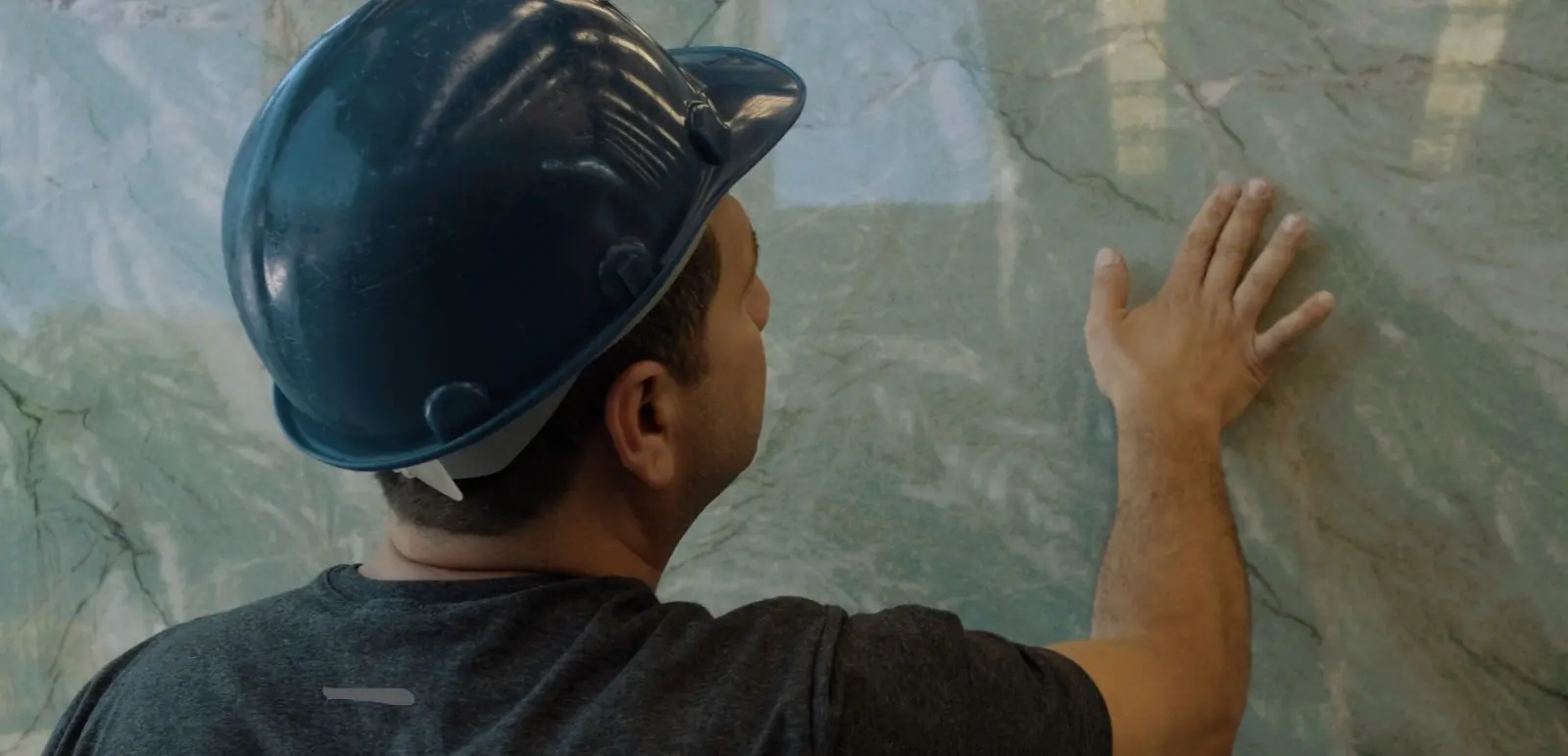
When we think of sustainable building materials, natural stone may not be the first option that comes to mind. But when we analyze its full life cycle, the picture changes — revealing an industry that has evolved significantly in environmental responsibility.
The life cycle of natural stone
Understanding the sustainability of any material requires looking at its entire journey. In the case of natural stone, this path runs through five fundamental stages:
At each of these stages, sustainable practices have been increasingly incorporated. The result is a material that, beyond being durable and timeless, carries a genuine commitment to the environment.
How the industry manages its impact
The natural stone industry has developed concrete solutions to reduce waste, conserve water resources, and return value to what would otherwise be discarded.
95% of the water used in the manufacturing and processing of natural stone is reused in a closed circuit by companies in the sector.
Waste recovery
The dust and fragments generated during the extraction and processing of stone do not go to waste. They are transformed into:
- Soil enrichment with rock powder, returning minerals to the earth
- Manufacturing of high-performance ecological bricks
- Production of construction materials in general, reducing the use of virgin raw materials
Reuse of FIBRO waste
One of the most strategic by-products of stone processing is known as FIBRO — the slurry resulting from stone cutting. Rather than being discarded, this material is incorporated into:
- Red ceramics, where it improves the properties of the final product
- Portland cement-based components, reducing the consumption of conventional inputs
Reforestation
When extraction affects vegetation areas, the sector adopts reforestation practices to restore the balance of local ecosystems, meeting legal requirements and going beyond them.
“Natural stone: a material that lasts centuries, and one the industry has learned to extract with ever-greater responsibility.”
The next time you choose a granite countertop, a marble cladding, or a quartzite facade, know that behind that beauty lies a production chain committed to the future — from the soil it extracts from to the destination it gives every fragment.
Environmental Product Declaration
The Brazilian natural stone sector is moving toward an even more sustainable future, and the EPD project is a fundamental part of that movement.
CentroRochas is leading the EPD (Environmental Product Declaration) project — an initiative that allows companies in the sector to record data on the complete life cycle of their product, including consumption of inputs, energy, fuel, and much more.
The information is entered into a secure, encrypted system with full privacy — no data is shared between companies.
With this data in hand, the sector will be able to demonstrate, with real numbers, that Brazilian natural stones are a sustainable material. This opens doors to:
✅ Achieving sustainability certifications
✅ Access to projects that require CO₂ emission verification
✅ New international markets
✅ Greater competitiveness against competing materials
Get involved! This project belongs to all of us and is completely free of charge.
Contact us on WhatsApp: wa.me/5527997542172



.webp)


